At Garden Montessori Schools, parents obtain the knowledge they need in order to make the best decisions for their children. This article is a detailed comparison of Montessori and Traditional education systems, which will provide assistance in determining which approach is most suited to your child’s educational style, character, and unmet needs.
The Montessori Method
The Montessori method of education is the brainchild of Italian educator and philosopher, as such, focuses on the child’s independence, self-directed learning, and the use of manipulative materials. Montessori, unlike all other educational systems, including Traditional, recognizes that children all have their own unique pace as well as interests.
In Montessori classrooms, children choose activities from a carefully prepared environment. Teachers are not lecturers, but rather, they are guides who watch children and provide assistance when they need it. This method teaches children self-directed learning, as well as the motivation and responsibility that are required to be successful in life.
Traditional education system
Traditional education follows a schoolteacher-centred model where instruction is formalized and structured. In this system, scholars of the same age group follow a fixed class, schedule, and tutoring system. When comparing Montessori vs Traditional, traditional education emphasizes discipline, invariant literacy issues, and schoolteacher-led- led instruction.
Traditional classrooms generally involve lectures, handbooks, schoolwork, and assessments such as tests and grades. This system has been used for generations and is effective for children who thrive in structured, predictable surroundings.
Montessori vs Traditional Tutoring Style
One of the most significant differences in Montessori vs Traditional education is the tutoring style.
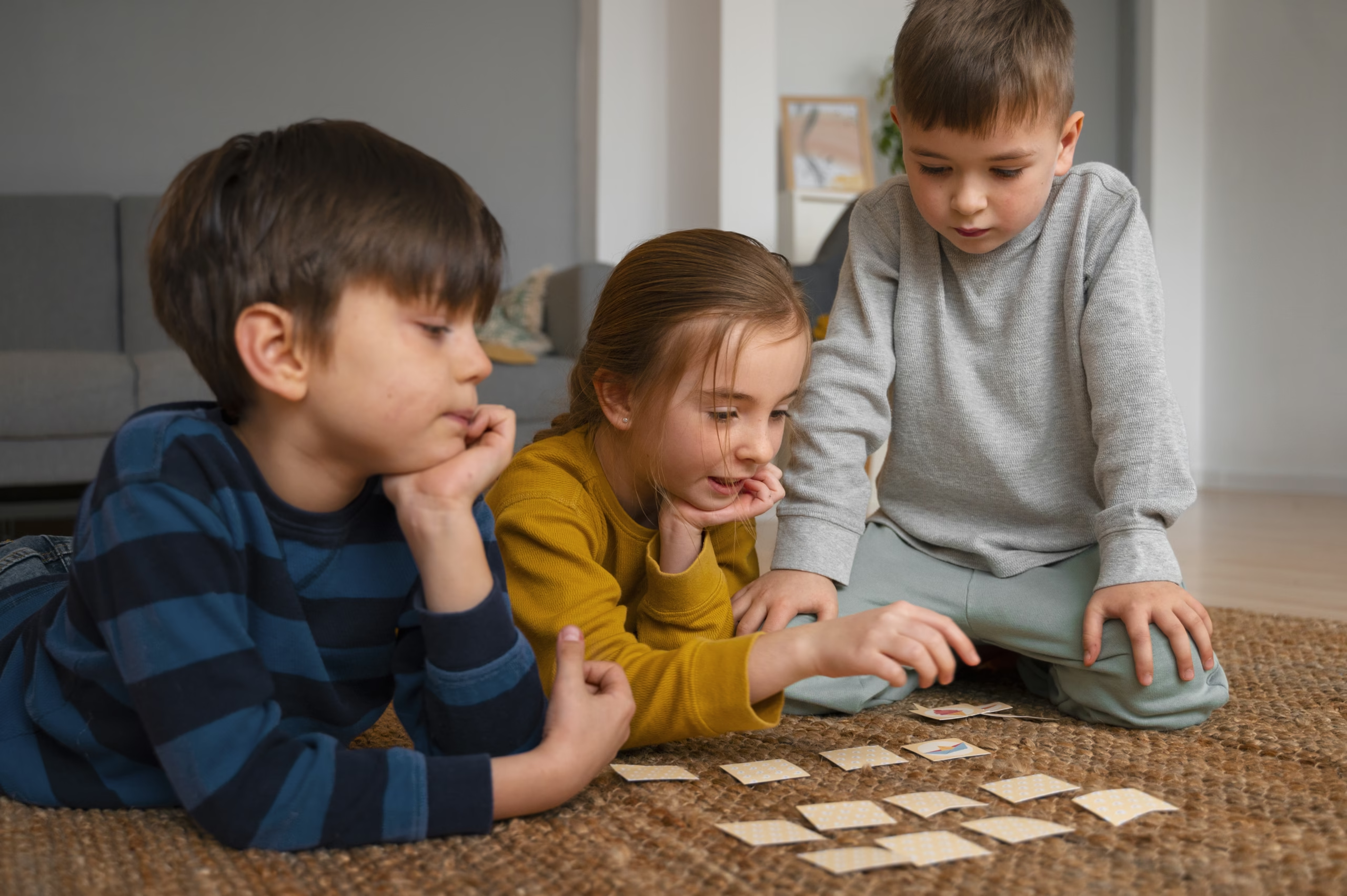
In Montessori classrooms, educators collaborate instead of direct teaching. No preceptor teaches directly. They watch each child and suggest new Montessori materials accordingly. Literacy is also interactive and hands-on.
In contrast, preceptors in traditional classrooms demonstrate tasks for the whole class. Learners listen to instructions, complete a task conjunction, and move on as a class. While some students learn well in this format, a one- size- fits approach may frustrate others.
Montessori vs Traditional Learning Environment
The learning environment is one of the most critical factors in the Montessori vs Traditional debate.
Montessori classrooms, on the other hand, are peaceful, well-structured, and child-centred. All the furniture and educational materials are child-sized, and learning materials are easily accessible. The children have the freedom to move about as they like. They can work on their own and in small groups, and they are able to concentrate on their work intensely.
With Montessori classrooms, children move about as they like, but traditional classrooms are more structured, with children placed in rows and on a schedule. They are expected to sit and pay attention for long periods of time.
Learning and Curriculum Pacing
In the discussion of Montessori vs Traditional, the pacing of learning is one of the most critical components.
In Montessori, children learn at their own pace. However, in the Montessori system, this is just the default. For example, a child may be able to do math at a higher level, but language is a struggle. The Montessori system is about mastery of skills, not surface-level memorization.
In traditional learning, children have a set class schedule and have to move on in strict time frames.
Academically, learners advance together through content, regardless of their individual pacing. This may lead to some children feeling as though they are being rushed or are being held back.
Assessments and Grades
The style of assessment further distinguishes Montessori from more classical, traditional forms of education.
Montessori schools prioritize and focus on observation, tracking individual progress, and tailoring instruction to individual development rather than grades and test scores. Students’ primary motivation to persist and learn is satisfaction and understanding rather than extrinsic or material rewards.
Most seminaries apply a systematized form of monitoring feedback based mostly on grades, exams, and report cards. Most report cards only measure the attendance of a scholar, and the grades give feedback on the quality of the work done. This form of monitoring feedback could be motivating to some accomplishment-oriented scholars, but to some, it gets stressful and creates a competitive atmosphere.
Social and Emotional Development
For the social development of a child, this stands to be the most crucial element of the Montessori vs Traditional Development debate.
Montessori practices frequently have a mixed class system where younger and older children work together. Younger children learn to fit in and work with a group, while older children learn to lead the group. This system promotes cooperative work and collaborative rather than competitive learning.
Traditional classrooms group children strictly by age. This Cohort system can foster peer, but it does not allow opportunities to be a mentor or a leader, which can be problematic.
Independence and Responsibility
In the Montessori vs Traditional education comparison, this stands to be the most important element to be independence, which is promoted in the system.
Montessori education promotes self-discipline, choice, autonomy, and responsibility from a very young age. Children can self-select activities, self-schedule, and work at their own pace, which causes learning responsibility to be inherent.
Traditional education is dependent on external discipline and teacher direction. This causes later independence to be very limited.
A potential quiet and positive atmosphere where opportunities to foster original thought and engage in a critical and creative sense to justify and explain a phenomenon are provided.
When assessing Montessori vs Traditional, creativity is another important factor.
Montessori education encourages curiosity, problem-solving, and creative thinking through hands-on accoutrements and real-life conditioning. Children are free to explore ideas deeply.
Bedrock conventional education might give a lesser attention to tool-and-die literacy and correct answers; however, this might also serve to stifle more free-flowing intellectual conversation.
Getting Children Ready for the Future
When comparing Montessori vs Traditional, parents often question which system best prepares children for the distant future and for their life goals.
Research shows that Montessori graduates possess more advanced critical thinking, greater tenacity, and superior social skills. In today’s world, these attributes are more and more essential.
In contrast, traditional education institutions train children effectively to do standardized testing, excel in tiered education systems and work in regimented work arrangements. Both systems of education are capable of training a child toward success, but the approach must be tailored to the demands of the child.
Montessori Vs. Traditional – Which Is Better?
There’s no universal answer to the Montessori vs Traditional question. The “better” system depends on your child’s personality, learning style, and experimental requirements.
Montessori may be ideal for children who
- Are curious and tone-motivated
- Learn style through hands-on conditioning.
- Thrive in flexible surroundings.
- Traditional education may suit children who
- Prefer structure and routine.
- Learn well through direct instruction.
- Respond appreciatively to clear rules and assessments.
At Garden Montessori Schools, we believe Montessori education provides a strong foundation by nurturing independence, confidence, and a genuine love for literacy.
Why Choose Garden Montessori Seminaries?
The Garden Montessori seminaries embrace genuine Montessori training, designed to foster whole development in children. With the genuine Montessori approach of our decorous preceptors, set rooms, and child-centred philosophy, every child is treasured in all respects.
In choosing Garden Montessori Schools, the parents are making the choice in a type of education that nurtures and nourishes advancement, wonder, and the love of reading and writing – all lasting benefits that the Montessori approach champions over Traditional education.
Conclusion
It is possible to observe two different educational philosophies from the contrast between the Montessori and Traditional educational systems. Montessori education promotes autonomy and holistic education, while the Traditional education approach is associative and is based upon a set of procedures.
At Garden Montessori Schools, we are proud to offer children and families the opportunity to grow and learn to their full potential through the genuine Montessori approach, where reading and writing are alive, meaningful and unforgettable.
FAQs – Montessori vs Traditional Education
What are the main differences between Montessori versus Traditional education?
In Montessori, learning is child-directed and self-paced. With Traditional education, the teacher leads a whole-class lesson, and children are expected to learn at the same rate.
Is Montessori education better than Traditional?
That really depends on the child’s learning style: if children are independent learners, they are likely to be more successful in Montessori. Conversely, children who learn better in a structured environment will likely do well in a Traditional setting.
Do Montessori seminaries use examinations and grades?
While there are no examinations and grades, most Montessori seminaries focus on observing and tracking progress instead.
Can Montessori scholars succeed in traditional seminaries later?
Yes, Montessori scholars generally acclimatize well due to strong independence and literacy chops.
Which children profit most from Montessori education?
Children who enjoy hands-on literacy, independence, and creativity benefit most from Montessori education.